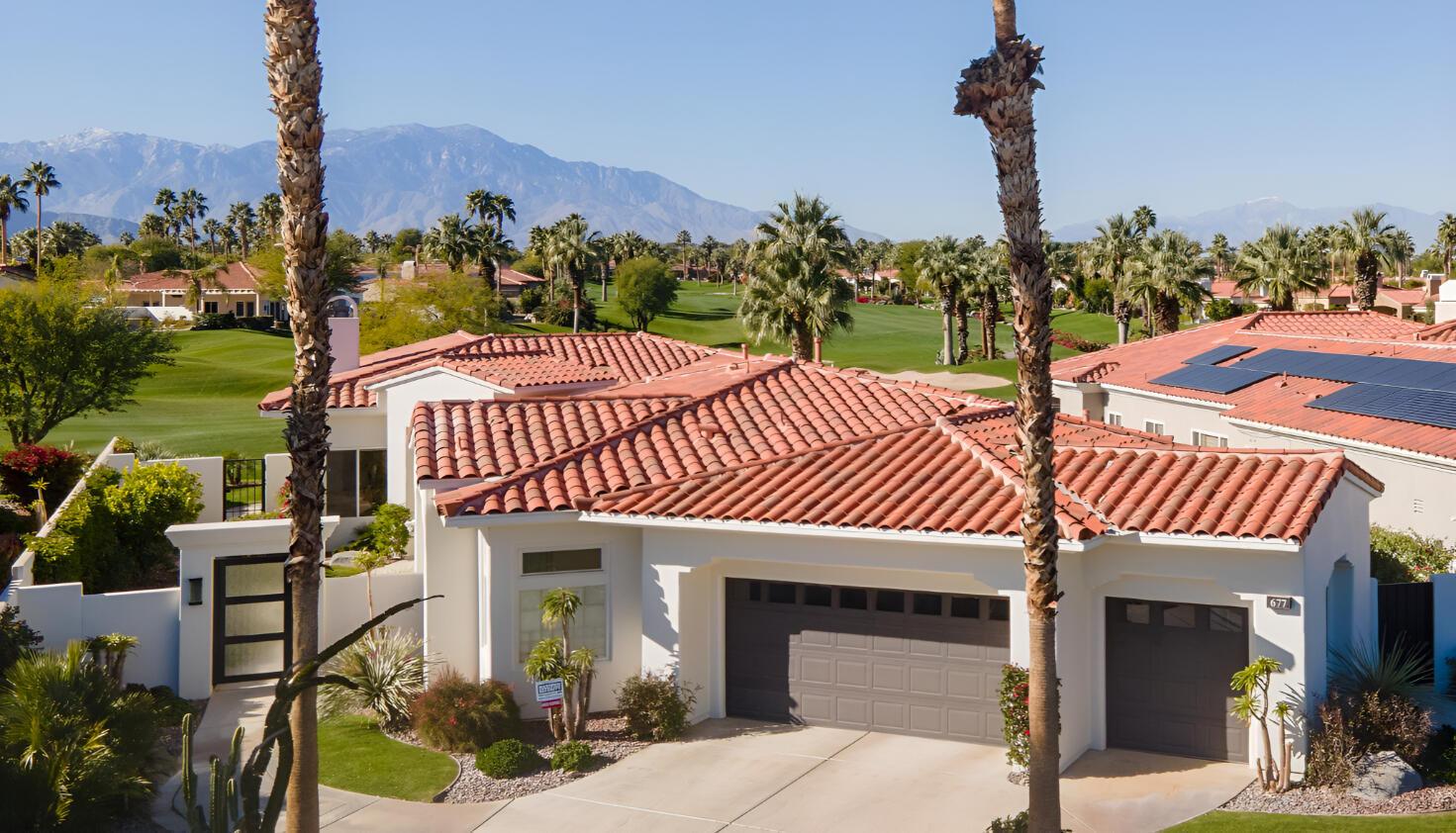
If you're shopping for a $1 million to $10 million home in Palm Desert, Indian Wells, Rancho Mirage, or La Quinta, the house is only half the decision. The other half is how you pay for it, and that choice affects your monthly carrying cost, how strong your offer looks, and how much flexibility you keep for the rest of your portfolio.
Plenty of desert buyers pay cash. Plenty of others don't want to tie up that much liquidity in a vacation property, especially with investments earning a solid return elsewhere. Neither approach is wrong. But financing a luxury second home here works differently than financing a primary residence in Orange County or Seattle, and buyers who understand those differences before they tour have a real edge.
In this guide you'll learn where the jumbo loan line sits in Riverside County for 2026, what lenders expect from second-home borrowers at this price point, how today's rates translate into real monthly numbers, and the local details (club dues, rental rules, appraisals) that catch out-of-area buyers by surprise. I've helped clients close more than $400 million in desert real estate over 23 years, and these are the questions that come up on nearly every luxury purchase.
What Lenders Actually Require for a Luxury Second Home in Palm Desert
Almost every financed purchase here is a jumbo loan
The 2026 conforming loan limit for a one-unit home in Riverside County is $832,750. Anything above that is a jumbo loan. Riverside County isn't designated a high-cost area, so the higher conforming ceiling some coastal California counties get doesn't apply here.
In practical terms, if you're buying at $2 million or more and financing, you're almost certainly in jumbo territory. Jumbo loans aren't backed by Fannie Mae or Freddie Mac, so each lender sets its own rules. That's why two banks can give you very different answers on the same purchase.
Typical second-home jumbo guidelines
Every lender is different, but here's what most buyers in this range should plan for:
- Down payment: Commonly 20% to 30% on a second-home jumbo, and sometimes more on loans above $3 million or so. Some lenders go lower for top-tier borrowers, but 25% is a realistic planning number.
- Credit score: Many jumbo lenders want 700 to 740 or higher for second homes, with the best pricing reserved for 760+.
- Cash reserves: Expect to show 12 to 18 months of payments in liquid or near-liquid assets after closing, and more if you own several properties. Reserves usually have to cover the payment on your primary home too.
- Debt-to-income ratio: Often capped around 43%, and your primary residence payment counts against you.
- Documentation: Full documentation is standard. Self-employed buyers should expect two years of tax returns and business statements.
- Appraisals: Some lenders require a second appraisal on larger loan amounts. More on why that matters in the desert below.
Second home vs. investment property: the classification matters
To qualify as a second home, you need to live in the property for part of the year, keep it as a single-unit home, and not put it in a mandatory rental pool or management agreement. If your plan is to rent it out regularly, the lender will likely treat it as an investment property, which usually means a larger down payment and a higher rate.
This is where local rules come in. Short-term rental laws vary sharply from city to city in the Coachella Valley. Rancho Mirage bans short-term rentals in nearly every zone, La Quinta stopped issuing new general vacation rental permits years ago, and Indian Wells limits rentals outside of tournament week to 29-night minimums. Palm Desert has its own permit structure. Be honest with your lender about your rental plans from day one, because misstating occupancy on a mortgage application isn't a paperwork issue, it's mortgage fraud.
Jumbo Loan vs. Cash vs. Other Options: Comparing Your Paths
What today's rates mean in real dollars
As of September 24, 2026, the average 30-year fixed jumbo rate was 7.28%, according to the Mortgage Research Center (reported by Forbes Advisor). That works out to about $684 per month in principal and interest for every $100,000 borrowed.
Here's how that plays out on a $3 million home:
| Down payment | Loan amount | Estimated monthly P&I at 7.28% |
|---|---|---|
| 25% ($750,000) | $2,250,000 | about $15,390 |
| 30% ($900,000) | $2,100,000 | about $14,364 |
Those figures don't include property taxes, insurance, HOA fees, or club dues. Rates change daily, so treat this as a planning snapshot, not a quote.
Paying cash, then financing later
Many luxury buyers here pay cash to win the house, then place a mortgage after closing to recover some liquidity. A cash offer often carries real weight with sellers, especially in competitive gated communities where a clean, fast close matters. Whether you can pull cash back out quickly afterward depends on the lender's rules on recently purchased properties, so talk to your lender about that plan before you write the offer, not after.
Other options worth asking about
- Securities-backed lines of credit or pledged-asset loans: If most of your wealth is in a brokerage account, some private banks will lend against it so you don't have to sell and trigger capital gains.
- Asset-based or asset-depletion loans: Useful for retirees or buyers with significant assets but lower documented income.
- Adjustable-rate jumbos: ARMs often start below fixed rates, which can make sense if you expect to sell or refinance within five to ten years.
- Relationship pricing with private banks: Moving assets to a lender can sometimes lower your rate or loosen reserve requirements.
Your CPA and financial advisor should weigh in on which structure fits your tax situation. I'm not a lender or a financial advisor, but I work alongside several luxury lenders who close desert purchases regularly and can make introductions.
Why Financing in Palm Desert and the Coachella Valley Is Different
This is the part national lending websites don't cover.
Club dues count against your debt ratio. In many of the Valley's private country clubs, membership is either mandatory or practically expected. Dues at the most exclusive clubs can run well into five figures a year, and initiation fees can be substantial. Lenders include required HOA and club assessments in your monthly obligations, so a home in a club with high mandatory dues can shrink the loan you qualify for. Get the full fee schedule early.
Property taxes are more than 1%. California's Prop 13 base rate is 1% of purchase price, but many Coachella Valley communities carry additional voter-approved levies and special assessments. Look at the actual tax bill for the specific property, not a generic estimate, when you run your numbers.
Appraisals can be tricky at the top of the market. A one-of-a-kind modern estate at Bighorn or a custom home on a double lot in Indian Wells may have very few true comparable sales. If the appraisal comes in below your contract price, your lender will only lend against the lower number. Building an appraisal contingency and a cash cushion into your plan protects you.
Insurance needs to be lined up early. California's homeowners insurance market has been tight, and your lender won't fund without bound coverage. Get quotes during your inspection period, not the week before closing.
Timing the season. Inventory and buyer activity pick up as the season starts in the fall. With valley-wide inventory running above its historical average this year, well-prepared buyers have room to negotiate. Having a full pre-approval (not just a pre-qualification) in hand before you tour puts you on equal footing with cash buyers.
Out-of-state and Canadian buyers. A large share of luxury buyers here come from Los Angeles, Orange County, the Pacific Northwest, and Canada. Buyers without U.S. credit history often need foreign national loan programs, which typically require larger down payments. Start that conversation early.
Work With a Local Expert: Call 760-880-8385
Financing is where a lot of luxury deals quietly fall apart: an appraisal that comes in short, club dues nobody factored in, or a rental plan that doesn't match the loan type. My job is to catch those issues before they cost you the house.
I'm Ryan Gaertner, a luxury broker with EQTY Real Estate at Coldwell Banker Global Luxury, a Certified Luxury Home Marketing Specialist (CLHMS), and a solo broker. When you call, you talk to me, not a team member. I'll connect you with lenders who know desert luxury properties, pull the real tax bill and club fee schedule for any home you're considering, and help you structure an offer that's strong whether you're paying cash or financing.
Call or text me directly at 760-880-8385.
Conclusion: Plan the Financing Before You Fall for the House
Financing a luxury second home in Palm Desert comes down to a few key decisions: jumbo or cash, fixed or adjustable, second home or investment property. Make those choices early, with real local numbers, and you'll shop with confidence and negotiate from strength.
Ready to start? Book a call at 760-880-8385 or visit desertrealestatesearch.com to download my free Palm Desert Luxury Buyer's Guide.
Follow and subscribe to our Palm Desert Living YouTube channel: www.youtube.com/@RyanGaertnerRE for weekly market updates, community tours, and buyer tips.
This article is for general educational purposes only and is not lending, legal, or tax advice. Loan guidelines and rates vary by lender and change often. Consult a licensed mortgage professional and your CPA before making financing decisions.
About Ryan Gaertner
Ryan Gaertner is a luxury real estate broker with EQTY Real Estate at Coldwell Banker Global Luxury, specializing in Palm Desert, Indian Wells, Rancho Mirage, La Quinta, and Palm Springs. With 23 years of experience, more than $400 million in closed sales, the CLHMS designation, and Diamond Preferred status with Concierge Auctions, Ryan works personally with every client, with no handoffs. CalDRE 01372839. Call or text 760-880-8385.